Guide to Classic Car Consignments for Owners
A cherished Bentley, Jaguar, or Aston Martin is rarely just another vehicle to its owner. It may represent years of careful maintenance, a long-held ambition, or a family history. This guide to classic car consignments explains how to sell that car through a specialist while retaining control over the details that protect its value.
Consignment is often a strong alternative to a private sale or an immediate dealer purchase, particularly for prestige British cars with the right provenance, specification, and condition. The specialist markets the vehicle on your behalf, handles buyer inquiries and viewings, and completes the transaction once an acceptable buyer is found. In return, the dealer receives an agreed commission.
The arrangement can produce a better result than a quick trade sale, but it relies on accurate preparation, realistic expectations, and a clear agreement from the outset.
What Classic Car Consignment Means
When you consign a classic car, you appoint a dealer to sell it for you. You remain the owner until the sale is completed, although the vehicle may be displayed at the dealer's premises, photographed, advertised, and shown to qualified buyers.
This differs from selling outright to a dealer. An outright purchase provides speed and certainty, but the dealer must leave room for preparation costs, stockholding, warranty exposure where applicable, and a resale margin. Consignment usually takes longer, yet it can place the car in front of buyers who are actively seeking a particular marque, model, or specification.
For a well-kept Bentley Continental GTC, an Aston Martin with a proper service history, or a desirable Jaguar, specialist presentation matters. The right buyer is not simply buying transport. They are assessing originality, records, mechanical confidence, cosmetic condition, and the confidence that comes from dealing with someone who understands the car.
Is Consignment the Right Route for Your Car?
Consignment suits owners who are willing to wait for the right purchaser and who want professional support without managing every call, viewing, and negotiation themselves. It is especially useful when a vehicle deserves a targeted audience rather than a broad, price-led advertisement.
It may be less suitable if you need funds immediately, if the car requires substantial work before it can be presented properly, or if your expected price is well above current market evidence. A specialist should be candid about this. The best asking price is not the highest number suggested. It is the figure that attracts serious attention while leaving sensible room for negotiation.
A car with minor needs can still be consigned successfully. However, an overdue service, warning light, tired roof mechanism, worn tires, or incomplete paperwork can all affect buyer confidence. In some cases, completing essential work before marketing will improve both the sale price and the speed of sale. In others, it may be more sensible to disclose the work clearly and price accordingly.
Preparing a Classic Car for Consignment
Good consignment begins with an honest assessment. A specialist should inspect the vehicle, review its documentation, identify its strongest selling points, and point out issues that could interrupt a sale. This is not about making a car look better than it is. It is about presenting it properly and avoiding unpleasant surprises during a viewing or inspection.
Service records are central to this process. Gather invoices, maintenance books, prior inspection records, ownership documents, manuals, spare keys, MOT history where relevant, and receipts for restoration or major repair work. For modern classics, records relating to electronics, convertible roof operation, suspension, transmission servicing, and cooling-system work can be particularly valuable.
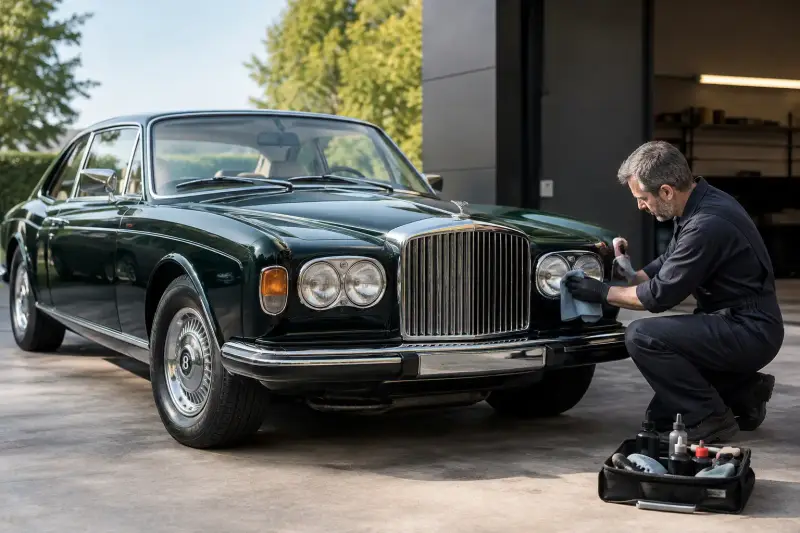
Presentation also deserves attention. A thorough clean, paint correction where appropriate, interior detailing, and careful photography can transform how a vehicle is perceived. That does not mean over-restoring a car or concealing honest age. Originality and a consistent history often matter more than a freshly applied finish that raises questions.
For prestigious convertibles, demonstrate that the roof operates correctly and that the weather seals, drains, and interior trim are in proper order. Buyers notice these details quickly. A car that feels cared for from the moment they sit inside is easier to sell at a fair market price.
Setting the Price: Evidence Before Optimism
Pricing is the point at which many consignments succeed or fail. Owners naturally remember what they paid, what they have invested, or what an exceptional example achieved at auction. Those figures can provide context, but they do not automatically establish today's retail value.
A sensible valuation considers model year, mileage, color combination, specification, service history, ownership, condition, market supply, and the cost of putting known faults right. A limited-production Aston Martin may command a premium for the right configuration. A Bentley GTC with comprehensive history and desirable options may stand apart from cheaper examples that need attention. Equally, an ordinary specification or patchy record can limit a car's appeal regardless of money spent on it.
Ask how the recommended asking price has been reached. A specialist should explain the market position rather than offer vague reassurance. It is also wise to agree a minimum net figure that you are prepared to accept after commission and any approved preparation costs.
What to Confirm in the Consignment Agreement
A written agreement protects both the owner and the dealer. Read it carefully before leaving the vehicle, and ask direct questions if any part is unclear. The agreement should set out the asking price, the dealer's commission, the length of the consignment period, and what happens if the price needs to be reviewed.
It should also explain who pays for photography, advertising, collection, storage, detailing, repairs, inspections, and any warranty offered to a buyer. Some costs may be included in the commission, while others may be charged separately. Neither approach is inherently wrong, provided the terms are clear before work begins.
You should understand where the vehicle will be kept, how it will be insured, whether road tests are permitted, and who is authorized to approve offers. Confirm when payment will be released to you after completion and how any outstanding finance, private plate, or registration paperwork will be handled.
Do not assume that every buyer inquiry is equal. A reputable specialist will qualify prospective purchasers, manage test drives responsibly, and avoid wasting your time with speculative offers. For high-value vehicles, this professional filtering is one of the practical advantages of consignment.
Why Specialist Representation Makes a Difference
General classifieds can put a car in front of many people, but volume is not the same as quality. A marque-focused dealer understands the questions informed buyers ask and the faults that can concern them. They can explain the ownership experience, discuss maintenance requirements honestly, and distinguish between a cosmetic issue and a genuine mechanical concern.
That knowledge is particularly valuable with complex prestige cars from the 2005 to 2020 period. These vehicles can offer remarkable value compared with their original list prices, yet buyers want reassurance that they have been maintained by people who understand them. A dealer with restoration and repair capability can assess a car before sale and organize sensible corrective work where it benefits the transaction.
Tedella Ltd brings more than 25 years of hands-on experience with prestige British marques, combining vehicle sales with repair, refurbishment, restoration, and part-exchange support. For an owner, that means one informed conversation can cover the vehicle's condition, likely market position, preparation needs, and sale strategy.
Keep Communication Practical and Regular
Once the car is advertised, agree how often you will receive updates and what information will be shared. You do not need a report on every casual inquiry, but you should know when qualified buyers have viewed the vehicle, what feedback has been received, and whether the market response supports the original price.
If interest is limited after a reasonable period, a price adjustment may be appropriate. This is not necessarily a reflection on the car. Seasonal demand, competing stock, and shifts in buyer confidence all influence the market. A small, timely correction is usually more effective than leaving an ambitious price unchanged for months.
A well-managed consignment should feel like a partnership. You provide an accurate account of the car and its history; the specialist provides market knowledge, professional presentation, and careful buyer management. That combination gives a good classic the best chance of reaching an owner who will value it properly.
The right sale is not always the fastest one. It is the one completed with clear paperwork, fair expectations, and the confidence that your car has moved on to someone prepared to enjoy and preserve it.