Bentley Suspension Restoration Done Properly
A Bentley Continental GTC should feel composed, controlled, and remarkably calm for a heavy, powerful convertible. When it begins to sit low after parking, thump over broken pavement, lean through bends, or display a suspension warning, the issue deserves more than a quick reset. Proper Bentley suspension restoration preserves the character that made the car special in the first place: effortless pace, secure handling, and genuine long-distance comfort.
For 2005 to 2020 Bentley owners, suspension work is often one of the most worthwhile investments in the car. It protects the driving experience, prevents related wear, and gives a buyer confidence that the vehicle has been maintained with care rather than simply prepared for sale.
Why Bentley suspension faults need specialist attention
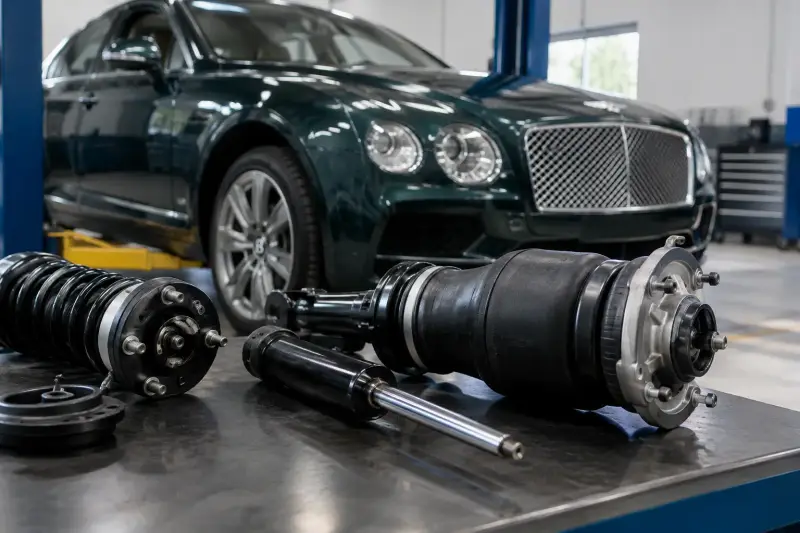
The Continental GT and GTC use sophisticated air suspension systems designed to balance comfort with control. The system brings together air springs, dampers, a compressor, valve components, ride-height sensors, control modules, and a network of lines and electrical connections. A fault in one area can create symptoms that appear to come from another.
For example, a car that drops at one corner overnight may have a leaking air spring, a tired valve block, a compromised line, or, less commonly, an issue affecting height measurement. Replacing the most visible component without a full diagnosis can leave the underlying problem unresolved. Likewise, a noisy compressor may be the result of the compressor itself, but it may also be working too hard because the system has a leak.
This is why a warning message should not be ignored or repeatedly cleared. A car can remain drivable for a short period, depending on the fault, but continued use may place extra strain on expensive components and can affect tire wear, braking stability, and handling. If the vehicle has lowered substantially or feels unstable, it should be inspected before further driving.
The signs your Bentley may need suspension restoration
Not every issue calls for a complete restoration. Some cars need a targeted repair and recalibration; others have reached the point where a planned, wider refresh offers better long-term value. The condition, mileage, service history, and intended use all matter.
Common warning signs include uneven ride height, a corner that sags after standing, a suspension fault message, excessive compressor running, or a noticeable change in ride quality. Owners may also feel knocking over rough surfaces, vague steering, increased body movement, or a sharper response to potholes than expected.
A vehicle that appears level can still have suspension wear. Control-arm bushes, ball joints, links, dampers, top mounts, and wheel bearings all contribute to how a Continental GTC feels on the road. A Bentley is engineered as a complete system. Restoring only the failed air component while overlooking worn chassis parts may improve the warning light but not restore the drive.
Changes that are easy to dismiss
Suspension decline is often gradual. An owner who drives the same car for years may not notice that it has become firmer, noisier, or less precise until they drive a well-sorted example. This is particularly true of convertibles, where a settled, quiet chassis has a major influence on refinement with the roof down.
Pay attention to changes in parking height, the time taken for the car to rise after starting, and whether one tire is wearing differently from the others. These are useful observations for a specialist and can make diagnosis faster and more accurate.
What a proper Bentley suspension restoration includes
The first step is not fitting parts. It is inspection and diagnosis. A suitable process begins with fault-code reading, ride-height checks, visual examination of air springs and lines, compressor performance testing, and assessment of the wider steering and chassis components. The vehicle should also be road tested where safe to do so.
Once the fault is established, the repair plan should be clear. A minor issue may require a sensor, calibration, or local repair. If an air spring is leaking or perished, replacement is generally the sensible route. When one unit has failed due to age, it is worth discussing whether the matching unit on the same axle should be addressed at the same time. There is a cost trade-off, but paired replacement can help maintain balanced behavior and reduce the chance of returning soon for the opposite side.
A more comprehensive restoration may include replacement of worn air-suspension components, dampers where required, control arms or bushes, links, mounts, and associated hardware. It should finish with correct ride-height calibration and a precise wheel alignment. Alignment is not a finishing extra. It is essential after suspension geometry has been disturbed, both for handling and for protecting expensive tires.
Genuine, OEM-quality, or aftermarket parts?
There is no universal answer. The best choice depends on the vehicle, its condition, how it is used, and the owner's priorities. For collectors seeking originality and those preserving an exceptional low-mileage car, genuine parts may be preferred where available. For a regularly used GTC, carefully selected OEM-quality components can offer sensible value without compromising the integrity of the work.
The concern should never be simply finding the cheapest replacement. Poorly made air-suspension components or unsuitable chassis parts can create fitment issues, inconsistent ride quality, and premature failure. A reputable specialist should explain the options before work begins, including the likely benefits and limitations of each route.
Why calibration and alignment matter
Modern Bentley suspension is electronically managed. Replacing a component without setting ride heights correctly can leave the car sitting incorrectly, handling poorly, or producing warning messages. Calibration ensures that the control system recognizes the proper physical height at each corner.
Wheel alignment should then be carried out to the correct specification. On a heavy grand tourer, small deviations in camber, toe, or ride height can quickly affect tire wear and straight-line stability. Owners sometimes blame tire noise or steering pull on the tires themselves, only to find that tired suspension components or incorrect geometry are the real cause.
This final stage separates a repair that merely gets the car moving from one that returns it to the assured behavior expected of a Bentley.
The value of preventative suspension care
A well-maintained Continental GTC can be an appealing and usable prestige car, but deferred maintenance changes the equation. Air-suspension problems rarely improve with time. A small leak can overwork the compressor. Worn joints can affect alignment. Incorrect ride height can place the chassis outside its intended operating range.
Regular checks are especially wise before a long trip, after a harsh pothole impact, or when a vehicle has spent extended periods unused. Cars that sit for months may reveal weaknesses as seals age and batteries lose charge. Keeping the battery in good condition also matters, as low system voltage can contribute to misleading fault messages on electronically controlled vehicles.
Service records make a difference when the time comes to sell or part exchange. A file showing proper diagnosis, quality parts, calibration, and alignment reassures the next owner that the car has been cared for correctly. It also makes it easier to distinguish a well-maintained example from one that has had warning lights temporarily suppressed.
Choosing the right restoration approach
The correct scope is determined by the car in front of you. A carefully used, lower-mileage Bentley with one identified leak may need a focused repair. A higher-mileage example with original air springs, worn arms, and tired dampers may benefit from a staged restoration that renews the system in a logical order.
The key is transparency. You should know what has failed, what is worn but still serviceable, what can reasonably wait, and what should be completed now to avoid unnecessary duplicate labor. That approach respects both the car and the owner's budget.
With more than 25 years of hands-on experience in prestige British cars, Tedella Ltd approaches Bentley work with that practical mindset. Collection can be arranged across North London, Hertfordshire, and surrounding areas when a car is not suitable to drive to the workshop.
A Bentley should not feel like a compromise between comfort and control. If your GTC has begun to lose the calm, confident ride that defines it, a careful inspection now can protect its mechanical condition, its market appeal, and every mile you intend to enjoy behind the wheel.